
by Kevin Bunn | Apr 8, 2014 | News
According to an article on WRAL, When East Millbrook school officials started sensing tension among their students they brought in Professor Jon Powell and the Campbell Law School Juvenile Justice Project which he leads. The Campbell Law School Juvenile Justice Project is a group of Campbell law students who work with Wake County school children to help them resolve conflicts. The Project partners with several Wake County middle and high schools and is funded through the Campbell University Norman Adrian Wiggins School of Law.
An anonymous eighth grader at East Millbrook complained that students just “didn’t get along.” “It was like he-she said stuff.” The law school mediators focused on the harm that had been done and how that harm could be addressed in a positive way. Mediators first talk to the students separately, then together, to help keep a conflict from escalating into a fight. Professor Powell and the law students’ goal is to get both sides to understand the root of the problems so it doesn’t build up again. “We just worked it out that day” said the eighth grade student.
The Campbell Law School Juvenile Justice Project has dealt with about 80 cases in the last school year. In the last ten years 95% of the students who completed the mediation didn’t offend again. A vice principal at East Millbrook said that the students behavior after the program was “calmer, not necessarily best friends but at peace.”
One of the major changes in the practice of law over the past twenty years has been the increased use of mediation to resolve conflicts. Practically every NC automobile accident, personal injury or workers’ compensation case that is filed is ordered to mediation. There are many NC personal injury lawyers who now limit their practice to working as a mediator. And most NC automobile accident lawyers spend more time in mediation that in trial.
So it’s probably a good idea to start training lawyers in law school to mediate conflict. And I guess if they can mediate a middle school spat they can mediate anything.

by Kevin Bunn | Mar 11, 2014 | Personal Injury, Workers' Compensation
Increasingly, parties to a lawsuit or claim are demanding confidentiality clauses in NC personal injury and workers’ comp cases, as well as breach of contract, discrimination claims and even divorce actions. Many employers now require a separate “resignation and release” as a condition of settling a NC workers’ compensation claim, and these agreements often include a confidentiality clause. The reason is pretty straightforward — employers and businesses are reluctant for their employees and competitors to know what they have paid on a claim. My own view is that in the vast majority of cases nobody except the parties much cares what is paid, and its better to not have any remaining post-settlement obligations between the parties. But defendants frequently feel differently.
Recently, the breach of a confidentiality provision cost an age discrimination claimant his $80,000 settlement. Patrick Snay, the former Head of School at Gulliver Preparatory Academy Miami, Florida, filed an age discrimination claim against his employer after his 2010-11 contract was not renewed. The case settled for the payment of $10,000 in back pay plus $80,000. Unfortunately, Snay apparently told his teenage daughter about the deal and she could not resist posting the result on Facebook, advising her 1200 Facebook followers that “Mama and Papa Snay won the case against Gulliver. Gulliver is now officially paying for my vacation to Europe this summer. SUCK IT.” Needless to say, word of the the post got back to Gulliver officials, who promptly advised Snay that he had broken the confidentiality agreement and would not be receiving his settlement. The Third District Court of Appeal for the State of Florida sided with the school, holding that Snay’s disclosure of the settlement to his daughter violated the confidentiality clause.
Of even greater concern is the potential tax liability associated with including confidentiality clauses in NC personal injury and workers’ compensation cases. 26 U.S.C.A. section 104(a)(2) provides that “gross income does not include the amount of any damages (other than punitive damages) received (whether by suit or agreement and whether as lump sum or as periodic payments) on account of personal physical injuries or physical sickness.” So in general, workers’ compensation and personal injury proceeds are not taxed. However in 2003 the IRS ruled that money paid to secure a confidentiality clause is not compensation for personal injuries or physical sickness and so is taxable. Amos v. Commissioner, 2003 Tax Ct. Memo, LEXIS 330 (2003). (We have Dennis Rodman to thank for that. Look it up if you don’t believe me.) So if you have to sign a confidentiality agreement in your NC personal injury or NC workers’ compensation case consider assigning a specific amount of the settlement to that provision, and plan on paying taxes on that amount.
Finally, here are a few tips if you are considering entering into a confidentiality clause along with your personal injury or workers comp case:
- Raise the issue of any confidentiality agreement during settlement discussions.
- Be sure you are allowed to discuss the settlement as required to receive tax and legal advice, meet any obligations to business partners or insurers, or and to comply with any future court orders.
- Know exactly what is confidential. Does the non-disclosure apply to the terms of the settlement, the nature of the dispute itself, information exchanged between the parties?
- Understand the consequences of any breach of the confidentiality agreement. Most confidentiality agreements contain a “liquidated damages” clause, setting specific amount of money as the damages for breach of the clause.
Please call or email if you would like to discuss confidentiality clauses in NC personal injury and workers’ comp cases in North Carolina.
by Kevin Bunn | Feb 26, 2014 | News, Workers' Compensation
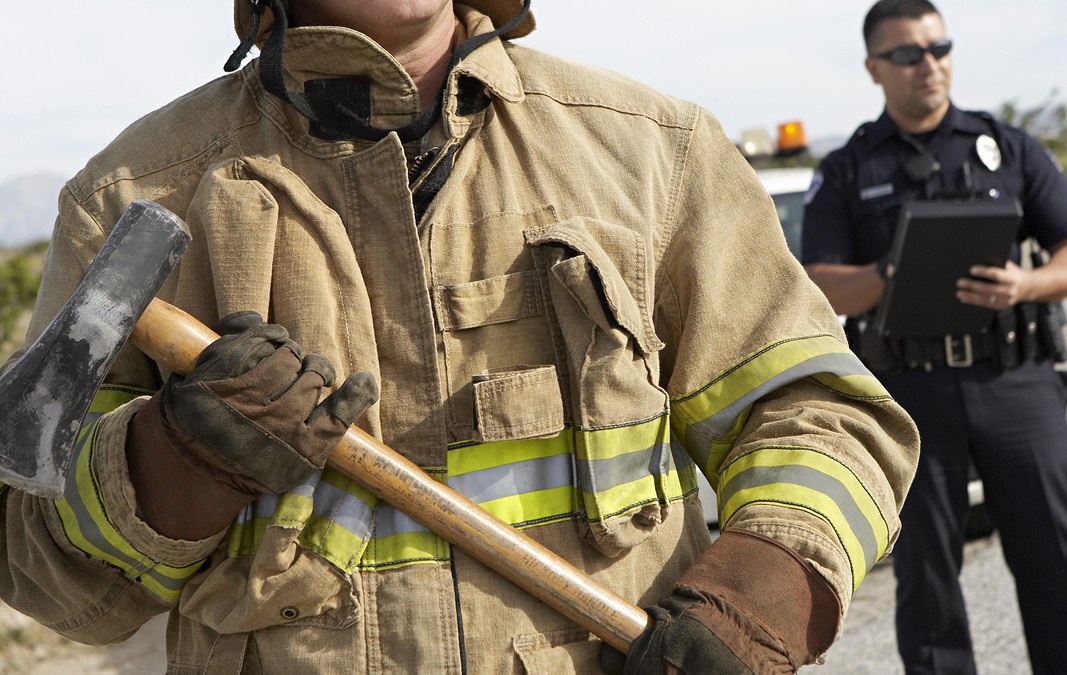
The Wilmington City Council recently voted to reduce Workers’ Comp Benefits in Wilmington NC for firefighters and police officers who are injured in the line of duty. Previously, injured safety workers could draw up to 100% of their pre-injury wages through the city’s workers’ comp program. The change reduced the compensation to the minimum required by the North Carolina Workers’ Compensation Act.
These 100% reimbursement plans are generally referred to as salary continuation. Many state law enforcement officers continue to be eligible for salary continuation through the State of North Carolina’s workers’ compensation plan. Teachers may also be eligible if they are injured in an episode of violence.
by Kevin Bunn | Feb 22, 2014 | Uncategorized
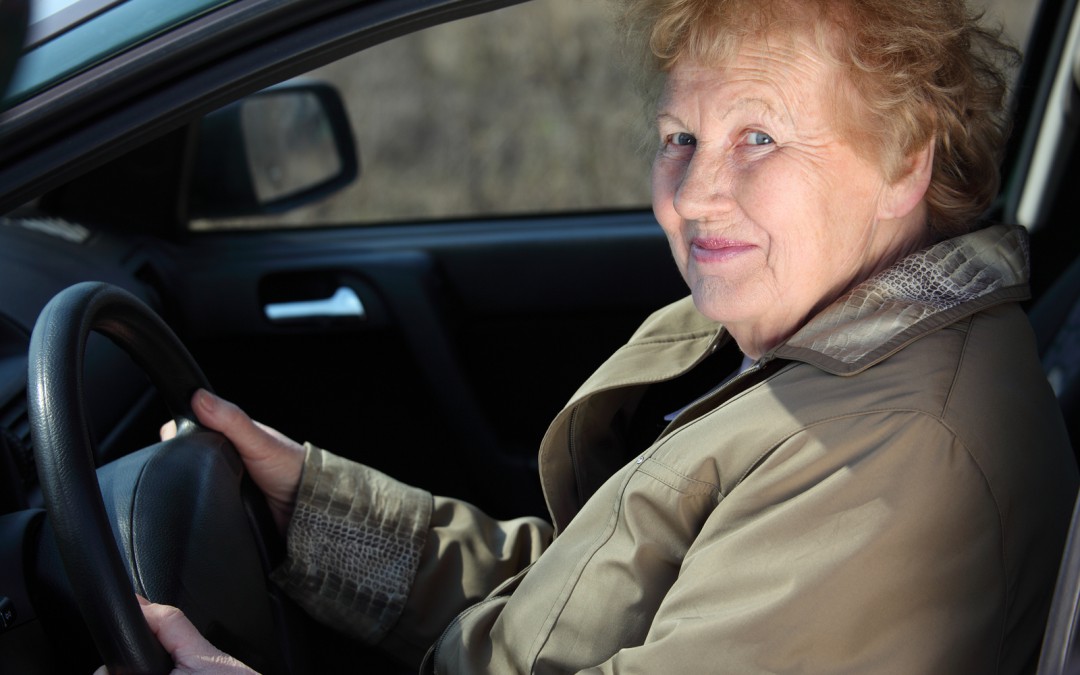
Given that older drivers are more likely to be involved in automobile accidents, what can we do about it? The National Institute on Aging provides the following questions on helping older drivers assess whether they should consider stopping driving:
- Do other drivers often honk at me? Have I had some accidents, even if they are only “fender benders”?
- Do I get lost, even on roads I know?
- Do cars or people walking seem to appear out of nowhere?
- Have family, friends, or my doctor said they are worried about my driving?
- Am I driving less these days because I am not as sure about my driving as I used to be?
- Do I have trouble staying in my lane?
- Do I have trouble moving my foot between the gas and the brake pedals, or do I confuse the two?
What can an older driver do to ensure they are as safe as possible? The NIH has some suggestions on helping older drivers with that as well.
- Drive a vehicle with an automatic transmission, large mirrors, and extensive safety equipment, including side air bags and traction control;
- Stay active and exercise to keep strength and flexibility;
- Have your vision checked regularly and stay current with prescriptions, including glasses;
- Avoid driving at night if you have difficulty seeing in the dark;
- Have your hearing checked regularly. Get a hearing aid if you need it and use it when you drive. Keep it as quiet as possible in the car when you drive;
- Leave extra space between your car and the car in front of you;
- Brake early when you need to stop;
- Avoid congested areas if you can. Plan your route to avoid complicated intersections;
- Drive in the right-hand lane, where traffic moves more slowly;
- Take a driving safety or refresher course. The AARP, and AAA can help you find a class nearby;
- Talk to your doctor or a family member about any concerns, especially you become confused while driving;
- Pay careful attention any warnings on your medications;
- Don’t drive if you do not feel well or if you feel light-headed or drowsy;
- Avoid driving in bad weather.
Many families struggle to decide when and how to approach helping older drivers, especially with the decision about continuing to drive. It can be difficult balancing the independence driving brings with the clear dangers associated with older drivers. The AARP has some excellent suggestions if you need to have “the talk.”
North Carolina, like many states, has special rules for older licensees. North Carolina drivers who are 70 years of age or older when their driver’s license expires generally must renew their license in person at a DMV office. Licenses issued to North Carolina drivers aged 54 and older are valid for five years.
Finally, in North Carolina, anyone, including doctors, family members and law enforcement officers may report potentially unsafe drivers of any age to the Department of Motor Vehicles’ medical evaluation program. The NC DMV can revoke licenses, require medical reports, or impose restrictions on trips and time of operation.
If you are involved in a car accident in Cary, NC, or Raleigh, NC, or elsewhere in North Carolina call Cary Personal Injury Attorney Kevin Bunn for your free consultation.

by Kevin Bunn | Feb 21, 2014 | Car Accident
First the good news about older drivers and automobile accidents. Older drivers are less likely to be killed or injured in a car crash today than twenty years ago according to a study by the Insurance Institute for Highway Safety. Older drivers are still significantly more likely to die in an automobile accident than younger drivers, but the gap is narrowing.
Between 1997 and 2012, fatal crash involvement rates per licensed driver fell 36% for drivers aged 70 to 74, 46% for drivers 75 to 79, and a whopping 49% for drivers 80 and older. Rates for middle aged drivers, those 35 to 54, fell 30% over the same period.
Overall, deaths for drivers and passengers have fallen across the board. Drivers 80 years old and older have the highest fatality rates, followed by teens and drivers in their 20’s.
The Insurance Institute attributed the decline in fatalities to safer cars and more active and healthy older drivers. Since the 1990’s side air bags, traction control and collision avoidance systems have all become more common. All of these are likely helping older drivers survive.
Not surprisingly, teens are most likely to be involved in automobile accidents. Drivers over 65 are second most likely.
All of this comes at a time when record numbers of older drivers are hitting the road. By 2050, roughly 16% of the population of the United States, 64 million people, will be over 70. The number of Americans over the age of 80 is expected to almost triple. The Insurance Institute found that a higher percentage of older Americans are keeping their license and are driving more miles.
So, what is the connection between older drivers and automobile accidents? Why are older drivers more likely to cause accidents and to be seriously injured? According to the National Institute on Aging, there are a number of factors at play.
- Changes in the body, including stiff joints and muscle weakness;
- Diminished eyesight, especially at night and when faced with glare;
- Changes in hearing that make it more difficult to hear horns, sirens or other warning sounds;
- Slower reflexes can make it more difficult to react quickly;
- Other health problems such as dementia, Parkinson’s disease, stroke and arthritis can interfere with driving;
- Medicines, especially those that cause you to feel light-headed or drowsy.
Now that we know more about older drivers and automobile accidents, what can you do about it?
If you are injured an automobile accident in Raleigh, NC, or Cary, NC, Apex, NC, or elsewhere in North Carolina call Cary Automobile Accident Attorney Kevin Bunn for your free consultation.